Best Cooling Options for a Two-Car Garage
A two-car garage often holds more than vehicles. It may serve as a workshop, home gym, storage area, or hobby space, yet summer heat can make it difficult to use comfortably. Fans offer quick relief, while a mini split AC for garage use provides more consistent temperature control when the space is occupied regularly. The right solution may be a mini split air conditioner, portable AC, window unit, or ventilation system, depending on the garage’s insulation, layout, and cooling needs.
Why Does a Two-Car Garage Get So Hot?
A two-car garage has a large door, broad roof area, and multiple exterior-facing surfaces that absorb heat throughout the day. When the garage door faces west or south, direct afternoon sunlight can raise indoor temperatures rapidly. Metal doors and dark roofing materials may intensify this heat gain.
Limited airflow makes the situation worse. Many garages have few windows, and opening the main door during the hottest part of the day simply allows more warm air inside. Recently driven vehicles also continue releasing engine heat after they are parked.
Additional heat may come from refrigerators, freezers, power tools, lighting, and workout equipment. Because most garages receive less insulation than the main house, this accumulated heat can remain trapped well into the evening.
Improve Insulation and Ventilation Before Adding AC
Cooling equipment performs better when the garage can retain conditioned air. Start by checking the garage door, which is often the largest uninsulated surface. An insulated replacement door or a compatible insulation kit can slow heat transfer and reduce the effect of direct sunlight.
The ceiling deserves equal attention, particularly when an unconditioned attic sits above the garage. Insulating exterior walls and sealing gaps around doors, windows, outlets, and utility openings can further limit warm-air infiltration. Damaged weatherstripping along the bottom and sides of the garage door should also be replaced.
Ventilation can help when the outdoor air is cooler than the garage. Opening the door briefly in the morning or evening allows trapped heat to escape, while an exhaust fan can improve airflow in enclosed spaces. During peak afternoon heat, however, doors and windows should generally remain closed.
Compare the Best Cooling Options for a Two-Car Garage
A ceiling or wall-mounted fan is the simplest option. Moving air can make people feel cooler, but it does not reduce the room’s actual temperature. Fans work best for short periods or alongside another cooling system.
Portable air conditioners provide active cooling and can be moved when needed. Their limitations include floor-space use, operating noise, condensate management, and the need for a properly sealed exhaust opening. In a larger two-car garage, one portable unit may struggle to distribute cool air evenly.
Window air conditioners can provide stronger cooling without occupying the floor. However, many garages lack a suitable window, and installation may affect security or block natural light.
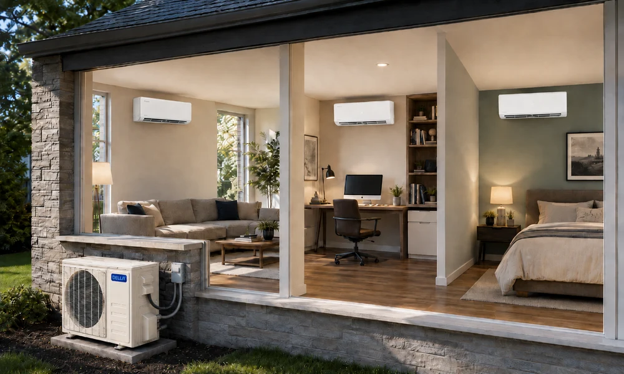
For a workshop, gym, or converted living area used frequently, a ductless mini split offers a more permanent solution. The wall-mounted indoor unit preserves floor and window space while directing conditioned air across the garage. Many models also provide heating, extending the usefulness of the space through colder months.
How to Choose the Right Cooling Capacity
Square footage provides a starting point, but it should not be the only sizing factor. Two garages with the same dimensions may require different capacities because of insulation, ceiling height, sun exposure, climate, and garage-door use.
A poorly insulated space in a hot southern climate will generally place a greater load on the AC than an insulated garage in a milder region. Tall ceilings increase the volume of air being conditioned, while refrigerators, tools, and exercise equipment add internal heat. Frequent door openings also allow cooled air to escape.
Undersizing may leave the system running continuously without reaching the desired temperature. Oversizing can cause short cycling and uneven comfort. The final capacity should therefore reflect the garage’s actual conditions rather than relying on vehicle count alone.
Which Garage Cooling Option Is Best for Long-Term Use?
For occasional projects, improved ventilation and a well-positioned fan may be sufficient. A portable or window AC can suit seasonal use when installation flexibility and a lower initial cost matter more than appearance or floor space.
Regularly occupied garages benefit from a more consistent approach. After insulation and air leaks have been addressed, a properly sized ductless mini split can provide targeted heating and cooling without extending the home’s existing ductwork.
No cooling system can fully compensate for an unsealed garage door or poorly insulated ceiling. Combining building improvements with suitable equipment produces more even temperatures, reduces unnecessary runtime, and makes a two-car garage more practical throughout the year.