What Keeps a Quartz Watch Ticking? A Closer Look at the Sunon Movement
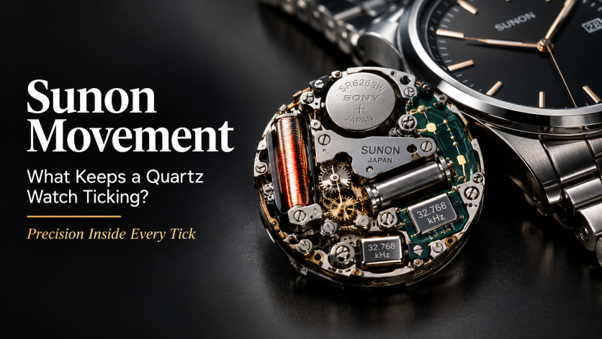
A quartz watch may look simple from the outside, but inside the case is a small system of electronic and mechanical components working together to keep accurate time. For watch repair professionals, collectors, and people building or restoring watches, choosing the right sunon movement is the important part of creating a reliable timepiece.
Quartz movements have become popular because they are practical, accurate, and easy to use in many different types of watches. Unlike mechanical watches, which rely on a mainspring and a complex system of gears, a quartz watch uses electrical energy and a quartz crystal to regulate time.
Understanding how a quartz movement works can help watch enthusiasts make better decisions when repairing, replacing, or building a watch.
How Does a Quartz Watch Keep Time?
A quartz watch is powered by a battery. The battery sends a small electrical current through the movement, including a tiny piece of quartz crystal.
When electricity passes through the quartz crystal, it vibrates at a very stable frequency. The movement’s electronic circuit measures these vibrations and uses them to control the movement of the watch hands.
This process allows the watch to keep time with a high level of consistency.
In simple terms, a quartz watch depends on several key parts:
- A battery that provides electrical power
- A quartz crystal that creates regular vibrations
- An electronic circuit that measures those vibrations
- A stepping motor that converts electrical signals into movement
- A gear system that moves the watch hands
These components work together continuously to keep the watch ticking.
Why Quartz Movements Are So Popular
Quartz watches are widely used because they offer several practical advantages.
For many people, a quartz watch is easy to own and maintain. There is no need to wind it every day, and the watch can continue running as long as the battery has sufficient power.
Some of the main benefits include:
- Reliable timekeeping
- Simple everyday operation
- No daily winding
- Compact movement designs
- Suitable options for repairs and replacements
- A wide range of watch styles
Quartz movements can be found in everything from simple everyday watches to more detailed designs with additional functions.
This flexibility has helped quartz technology remain important in the modern watch industry.
The Importance of the Movement
The movement is the part of the watch that makes everything work.
Even though it is hidden inside the case, the movement affects the way the hands move, the functions available on the dial, and whether the components fit together correctly.
When replacing a quartz movement, it is important to choose one that is compatible with the watch.
Before selecting a replacement, check details such as:
- Movement diameter
- Movement thickness
- Stem position
- Stem height
- Hand sizes
- Dial layout
- Date function, if required
- Battery requirements
A movement that appears similar may still have important differences. Checking specifications before purchasing can help prevent installation problems.
Simple Technology with a Clever Design
One of the reasons quartz watches are interesting is that they combine electronic technology with traditional watch components.
The quartz crystal helps control time, while gears and motors transfer that controlled movement to the hands on the dial.
This combination allows the watch to display time in a familiar way while using electronic technology for accuracy and efficiency.
The small size of quartz movements is another advantage. Compact designs can be used in many different case sizes and styles.
For watchmakers and repair professionals, this can provide useful options when working with replacement watches or custom projects.
Why Replacement Movements Matter
A watch does not always need to be replaced when the movement stops working.
In many cases, the watch case, dial, hands, and other external components may still be in good condition. If a compatible replacement movement is available, the watch may be restored to working order.
This is why understanding movement compatibility is important.
A successful replacement project often requires checking more than the shape of the old movement. Watch repair professionals may need to compare measurements, hand fitting sizes, dial feet, and stem positions.
Careful planning can make the repair process smoother and help preserve the original appearance of the watch.
Battery Life and Everyday Maintenance
A quartz watch is generally simple to maintain, but it still requires basic care.
The battery will eventually need to be replaced. The exact battery life depends on the movement, battery type, and features of the watch.
When replacing a battery, it is also useful to inspect the watch for other issues, such as:
- Battery leakage
- Dust inside the case
- Damaged gaskets
- Moisture
- Worn movement components
A leaking battery can damage the movement, so an unused or stopped watch should not be left with an old battery inside for an extended period.
Keeping the case properly closed and replacing worn gaskets can also help protect the movement from dust and moisture.
Soflypart for Watch Movements and Repair Projects
For watchmakers, collectors, and repair professionals looking for replacement movement options, Soflypart offers watch movements and related components for repair, restoration, and custom watch projects.
Its catalogue includes Sunon movement options as well as other types of watch movements and supporting parts. Depending on the needs of a project, users may also need items such as watch hands, crowns, dials, cases, batteries, and other replacement components.
Having access to different watchmaking parts can make it easier to plan a complete repair or build. However, it is always important to review the specifications of each item and confirm compatibility before installation.
Choosing the Right Quartz Movement
When choosing a replacement or new quartz movement, it helps to begin with the requirements of the watch.
Ask yourself:
- What size movement does the case require?
- Where is the crown located?
- What hands will be used?
- Is a date display needed?
- What battery does the movement require?
- Does the movement fit the dial design?
These questions can help narrow down the options.
For a professional repair, taking accurate measurements before ordering a replacement is often the best approach. Even small differences between movements can affect how the final watch fits and functions.
Final Thoughts
Quartz watches remain popular because they offer a practical combination of accuracy, convenience, and simple operation. A small quartz movement uses electrical energy, a vibrating quartz crystal, electronic circuits, and a stepping motor to keep the hands moving with reliable consistency.
Whether you are repairing an existing watch, replacing a stopped movement, or planning a custom build, choosing the correct movement is an important step. Compatibility, size, hand fitting, stem position, and functions should all be checked carefully.