Beyond the 3D Render: How to Vet a Landscape Design Firm
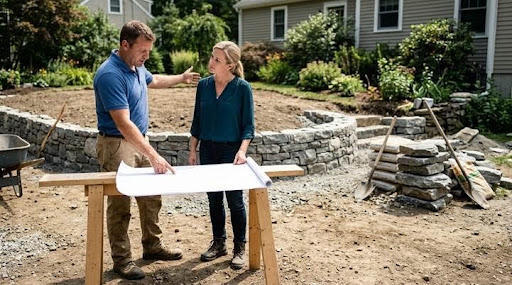
A firm’s project management and communication style are as critical as their design aesthetic.
By a landscape design industry contributor. A beautiful 3D rendering can effectively sell a vision, showcasing a perfect fire pit, a pristine stone patio, and impeccably placed trees. It’s easy to feel like the project is already a success. However, the most common point of failure in a major landscape project isn’t the design itself, but rather issues stemming from poor communication, contractual surprises, or a construction process that deviates from the approved images. The real work of choosing a partner happens long before the first shovel hits the dirt.
Vetting a professional requires looking beyond their portfolio to understand their entire process, from initial concept to final installation. A successful outcome depends on a combination of factors, including transparent communication, detailed material specifications, and a well-defined process for managing changes. For a significant investment like a full landscape design denver co project, the stakes are high and the details are critical. Your goal is to find a team whose operational process is as solid as their stonework.
Quick answer: To properly vet a landscape design firm, you should examine their credentials, scrutinize their portfolio of local work, and carefully study their contract and communication style. A firm’s project management methodology is just as crucial as its design aesthetic.
What’s inside
- What’s the difference between a landscape architect and a designer?
- How can you analyze a portfolio for more than just pretty pictures?
- What specific questions should you ask a designer’s references?
- Frequently Asked Questions
What’s the difference between a landscape architect and a designer?
The primary difference between a landscape architect and a landscape designer lies in state licensure and the scope of work they are legally permitted to design. A landscape architect (LA) is a state-licensed professional who has passed a rigorous national examination. This license authorizes them to design complex projects and stamp official plans for elements like grading, drainage, large retaining walls, or decks, all of which typically require building permits. Their training incorporates engineering principles to ensure projects are structurally sound, safe, and durable.
Conversely, a landscape designer typically focuses on the aesthetic and horticultural aspects of a project, such as plant selection, garden layouts, and the design of smaller patios or walkways that do not require structural engineering. While many designers are highly skilled and may hold certifications from professional organizations, they are not licensed by the state and cannot approve plans for major structural work. For many residential projects, a talented designer is an excellent choice.
Understanding this distinction is the first critical step. If your project involves altering your property’s elevation or requires engineered retaining walls, you will likely need a landscape architect or a design-build firm with one on staff. This choice also affects your budget. Labor costs are high in this market, as the U.S. Bureau of Labor Statistics reports that average weekly wages in Denver County were $1,971, significantly higher than the national average. This reflects the high cost of skilled labor across all trades.
❝ A common rule of thumb is that professional design fees will account for 10 to 20 percent of your total project budget. This fee is an investment in detailed planning, which helps prevent much larger and more expensive mistakes during the construction phase.
This high labor cost directly impacts your project’s budget. The U.S. Bureau of Labor Statistics reports the average hourly wage is $39.28 in the Denver metro area. The masons, irrigation specialists, and carpenters who build your project are all part of this premium labor pool. A well-conceived plan from the right professional saves time, prevents wasted materials, and avoids costly revisions, which helps you manage the total budget effectively.
How can you analyze a portfolio for more than just pretty pictures?
You should analyze a portfolio for evidence of problem-solving and local expertise, not just for attractive images. While a gallery of finished projects can be impressive, its true value lies in what it reveals about the firm’s process and its suitability for your specific needs. Look beyond the polished final photos for clues about their work: Do they demonstrate an understanding of local challenges? Can they successfully execute a client’s vision?
A truly informative portfolio will showcase more than just the “after” shots. Look for before-and-after comparisons to see how the firm handled challenges like a steep slope, poor drainage, or an awkward property layout. Does the work shown reflect the scale and style of your own property? A firm that specializes in sprawling suburban lots may not be the best fit for a compact city courtyard. The goal is to find a visual match that extends beyond your aesthetic taste to the types of problems they have solved.
This is particularly important in the Denver area, where landscapes must contend with clay soils, intense sun, and significant temperature fluctuations. A beautiful design on paper can fail quickly if it doesn’t account for these environmental factors. A portfolio heavy on thirsty, non-native plants might be a red flag.
Use this framework to dig deeper into any portfolio you review.
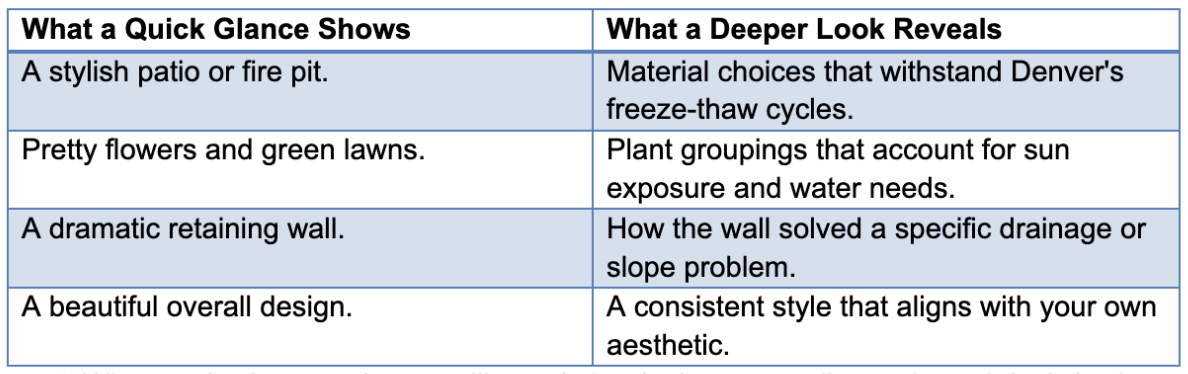
❝ When reviewing a project you like, ask the designer to walk you through it. Ask what the biggest unexpected challenge was and how they solved it. Their answer will tell you more about their problem-solving skills and communication style than any polished photograph ever could.
Ultimately, you are looking for a portfolio that displays intelligent solutions, not just attractive decorations. The projects should appear integrated with their environment and be constructed for long-term durability.
What specific questions should you ask a designer’s references?
You should ask references questions that reveal the firm’s process, not just the final product. Most firms will happily provide a list of satisfied clients. Your job is to dig beneath the surface-level satisfaction to understand what the working relationship was actually like. Generic questions like “Were you happy?” will yield generic, unhelpful answers. You need to ask targeted questions about budget, communication, and problem-solving.
Begin by discussing the budget. A common point of friction is the “change order,” which is a formal request for work that falls outside the scope of the original contract. Ask the reference how the firm managed these changes. Were the associated costs clearly explained and approved in writing before any work commenced? Were there unexpected fees on the final invoice? A professional firm will have a transparent process for managing these adjustments so you are never caught off guard.
Next, inquire about communication and project management. Who was their day-to-day contact, and how responsive was that individual to calls or emails? How did the firm handle delays? Delays due to weather or material availability are common, but the key is how they were communicated. Did the firm provide proactive updates, or did the client have to chase them for information? The answer reveals the company’s level of organization and respect for your time.
❝ Ask the reference this simple but powerful question: “What is one thing you wish you had known before the project started?” Their answer often cuts through the pleasantries and gives you the most honest insight into the firm’s strengths and weaknesses.
Finally, ask about the project’s durability and any follow-up service. How has the project held up after a full year of Colorado seasons? Have any pavers heaved after a freeze-thaw cycle? Did the irrigation system require immediate adjustments? Did any of the new plants die, and if so, what was the firm’s warranty policy and response? A successful landscape isn’t just about its appearance on day one; it’s about its performance and longevity over time.
Frequently Asked Questions
How can I find reputable landscape design firms in Denver? Beyond standard web searches, consider looking for professionals affiliated with trade organizations. Groups like the Associated Landscape Contractors of Colorado (ALCC) and the Colorado chapter of the American Society of Landscape Architects (ASLA) maintain member directories. These organizations often have high standards for membership and require adherence to a code of ethics, providing a vetted starting point for your search.
Is it really worth paying for a professional landscape design? Yes, a professional design is an investment that helps prevent costly mistakes. A comprehensive plan addresses critical factors like drainage, soil type, and appropriate plant selection for the climate, saving you from expensive revisions later. Given the high cost of labor and materials in Denver, the design fee is a small price to pay to ensure the final result is well-executed, durable, and meets your objectives.
What factors determine the final cost of a landscape project? The final cost is driven by three main factors: scale, complexity, and materials. A small patio project will cost significantly less than a full-yard renovation with an outdoor kitchen and pergola. Complex sites with steep slopes or poor access require more labor and specialized equipment. Finally, material choices have a huge impact. For example, natural flagstone costs more than concrete pavers, and custom-built items are more expensive than prefabricated ones.
How long does a typical landscape design and build project take? The timeline varies with project scope, but you can generally break it into three phases. The design phase, including consultations and revisions, can take anywhere from three weeks to several months. If your project requires permits for structures like decks or large retaining walls, that process can add another four to eight weeks. The construction phase itself can range from a few weeks for a simple patio to several months for a comprehensive backyard renovation.
What is xeriscaping and why is it important in Denver? Xeriscaping is a landscaping methodology designed to minimize the need for supplemental irrigation. It is not simply rocks and cacti; it involves thoughtful strategies like grouping plants with similar water needs, using efficient irrigation systems like drip lines, and improving the soil to maximize water retention. In Denver’s semi-arid climate, this approach is crucial for conserving water, lowering utility bills, and creating a resilient landscape that can thrive in hot, dry summers.
Choosing a Partner, Not Just a Plan
Choosing a landscape professional is ultimately an exercise in risk management. The vetting process, from distinguishing between a designer and an architect to analyzing a portfolio for technical skill and asking references pointed questions, is not about finding the lowest bid. It is about identifying a partner who has demonstrated they can navigate the complexities of a major construction project, from budget management to unforeseen site challenges. A firm’s ability to show you their process is as important as showing you their finished product.
A beautiful 3D rendering is compelling, but it offers no guarantee of a successful outcome. The true value of a professional lies in their ability to translate that vision into a durable, functional reality that can withstand Denver’s demanding climate. They must understand how to manage clay soils, select plants for a semi-arid environment, and build structures that endure freeze-thaw cycles. This technical expertise is what separates a lasting investment from a costly mistake.
Ultimately, the most important question is not “Do I like their style?” but “Can they prove they have solved problems like mine before?” The right firm will have clear, confident answers that are grounded in local experience and a transparent process.
About the author
C H Landscaping is a family-owned landscape design and construction firm based in Denver, Colorado. Since 2005, the company has specialized in creating custom outdoor living spaces for homeowners throughout the Denver metro area, Boulder, and Castle Rock. Their work focuses on integrating hardscaping elements like patios and outdoor kitchens with water-wise planting designs suited for the Colorado climate, and the team manages projects from initial 3D rendering to final construction.
Read more: 8 Best Landscape Contractors in Phoenix and Scottsdale
Read more: Understanding the Difference Between Lawn Care and Landscaping