Hurricane-Season Lessons for Gulf South Homeowners: Why FORTIFIED Roofs Are Spreading
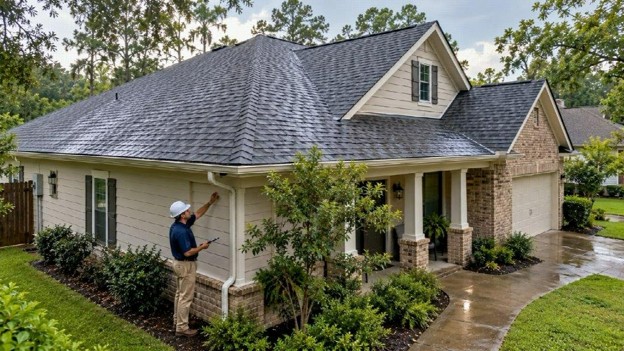
Every hurricane season leaves the Gulf South with the same scenes: blue tarps on rooftops, piles of shingles at the curb, and families waiting weeks for adjusters and contractors. A newer pattern has been showing up alongside them. Homes built or re-roofed to the FORTIFIED standard have been drawing attention for how they hold up, and Louisiana has put public money behind the idea. That combination is why FORTIFIED roofs are spreading from the coast to inland parishes like East Feliciana.
Inland parishes are not out of reach
It’s tempting to think of hurricanes as a coastal problem. Hurricane Ida showed otherwise. The National Hurricane Center’s Tropical Cyclone Report on Ida records that the storm made landfall at Port Fourchon on August 29, 2021, with maximum winds of 130 knots, about 150 mph, tying Laura and the Last Island Hurricane of 1856 as the strongest landfall on record in Louisiana west of the mouth of the Mississippi. The report estimates Ida caused about $55 billion in damage in Louisiana alone. After landfall, the center tracked north-northwest and passed between Baton Rouge and Hammond before weakening, which put hurricane-force wind much farther inland than many families had planned for.
For towns north of Baton Rouge, the lesson is simple. A strong storm doesn’t need to come ashore nearby to tear shingles off a roof.
What storms keep teaching us
Damage surveys after major hurricanes keep pointing to the same weak links:
- Roof edges fail first. Wind gets under shingles at eaves and rakes. Once the edge goes, the rest of the covering can peel away row by row.
- Water does more damage than wind. When the covering is lost, rain pours through the seams between sheets of roof decking and soaks insulation, ceilings, walls and furniture. A house can look mostly fine from the street and still be gutted inside.
- Decking comes loose. Sheathing attached with too few or the wrong nails can tear away in high wind and open the house to the storm.
- Openings matter. Once wind and water get inside, pressure can push the roof up from below.
Those lessons shaped the FORTIFIED program.
What FORTIFIED actually requires
FORTIFIED Roof is a voluntary construction standard developed by the Insurance Institute for Business & Home Safety, based on years of research that includes full-scale wind testing. Its core upgrades are:
- Stronger deck attachment, with ring-shank nails at tighter spacing.
- A sealed roof deck, using taped seams or a fully adhered membrane, so the house stays dry even if shingles or panels are lost.
- Better edge protection, with properly fastened drip edge and starter strips.
- High-wind-rated coverings, installed to the manufacturer’s high-wind specification.
- Third-party verification. A certified evaluator reviews photos and documentation from key stages before issuing the certificate.
Higher FORTIFIED levels, Silver and Gold, add requirements for windows, doors and the connections that tie the structure together.
Why adoption is growing in Louisiana
State grants. The Louisiana Department of Insurance runs the Louisiana Fortify Homes Program, which grants up to $10,000 toward upgrading a roof to the FORTIFIED standard. In its May 2026 announcement, LDI said the program would receive $80 million this year and that the June lottery would award 3,000 grants. Commissioner Tim Temple described Louisiana as the fastest-growing state in the country for FORTIFIED roofs.
Insurance discounts. Per the LDI program page, once a home is upgraded and certified, the homeowner receives a certificate that can be shared with the insurer for a premium discount. The certificate transfers to a new owner when the house sells and is good for five years before it needs renewal.
Expanding eligibility. The 2026 round added Acadia, Iberville, Jefferson Davis, Lafayette and Washington parishes and opened previously excluded parts of several others. If your parish isn’t on the grant map yet, the certificate and discount still apply when you build to the standard on your own.
Modest added cost. Because most of the upgrades are about nails, tape, edge metal and installation practice, building to FORTIFIED during a planned replacement usually adds far less than people assume. This plain-language guide to the Louisiana FORTIFIED roofing program walks through how the grant, the evaluator and the contractor fit together.
The grant rules people trip over
LDI’s eligibility rules are strict, and missing one can cost the grant:
- The home must be a primary residence with a homestead exemption.
- It must carry an active homeowners policy with wind coverage, plus flood insurance if it sits in a FEMA Special Flood Hazard Area.
- Patching doesn’t qualify. The entire contiguous roof covering must be replaced.
- Grant money is paid directly to the contractor, and the homeowner covers the evaluation and any costs beyond the grant.
- New construction, condominiums and mobile homes are not eligible for the grant.
Lessons for homeowners right now
- Plan before the storm. FORTIFIED is far easier to achieve during a planned replacement than in an emergency.
- Get the paperwork right. The certificate is what earns the discount, so hire a contractor experienced in the process who works with a certified evaluator.
- Think beyond “like for like” after damage. If a storm damages your roof, ask whether rebuilding to FORTIFIED makes sense and how your claim interacts with any grant.
- Keep up with maintenance. Clean gutters, check flashing and look over the roof after every major storm.
- Use established local contractors. Out-of-town storm chasers can be hard to find when a problem surfaces six months later.
If your roof has already taken a hit, an experienced team can document the damage, help with the claim and rebuild stronger. Baton Rouge roofing Contractors such as Premier South Roofing can often pair a storm repair with a FORTIFIED upgrade, so the new roof comes back stronger than the one the storm damaged.
Getting ready for the next registration window
Grant rounds open and close on short timelines, and selection is by lottery, so preparation matters more than speed. Gather a copy of your homestead exemption from the parish assessor, the declarations page from your homeowners policy showing wind coverage, and your flood declarations page if you need one. Create your profile on the program website ahead of time. Then get a contractor estimate, so if your name is drawn you can move straight to the evaluator inspection without losing weeks to paperwork.