Beyond the Drill: Four Filling Mistakes That Cost You More Than Money

Understanding your options is the first step toward a long-lasting dental restoration.
By a dental industry contributor.
Hearing you have a cavity is a common experience, often beginning early in life. According to a 2024 CDC report, approximately 50% of children aged 6 to 9 have had at least one cavity. For most adults, the news is so routine it barely registers, and the path forward seems simple: schedule a visit and get it fixed.
However, this simplistic view can lead to costly mistakes. Your choices regarding a standard tooth filling significantly impact its longevity, determining whether it lasts for five years or fifteen. A poorly executed filling doesn’t just fail; it can allow new decay to develop underneath, transforming a minor issue into a major problem that could require a crown or even a root canal. You can avoid these future costs by asking better questions at your next dentist appointment.
Quick answer: The most common mistakes include waiting too long for treatment, which allows decay to worsen, and choosing a filling material based solely on its upfront cost. Patients also frequently neglect to ask about the bonding process, which is critical for a long-lasting restoration, or they skip the simple aftercare required to protect the new filling.
What’s inside
- Why Delaying a Filling Is a Costly Mistake
- How Do I Choose the Right Filling Material?
- What Should I Ask About the Bonding Process?
- How Should You Care for a New Filling?
- Frequently Asked Questions About Dental Fillings
- The Goal: A Filling You Can Forget
Why Delaying a Filling Is a Costly Mistake
Postponing treatment allows a minor problem to escalate into a larger, more expensive one. A cavity is not merely a hole in your tooth; it is an active area of decay. Bacteria metabolize sugars and produce acid that weakens the tooth’s hard outer enamel. Once this protective layer is breached, decay spreads more rapidly into the softer dentin layer below.
This progression directly affects the type of repair you will need. A small area of decay requires only a simple filling. If you wait for months, that same cavity can destroy enough tooth structure to necessitate a dental crown, which is a more complex and costly restoration. The longer you delay, the more of your natural tooth is lost and the more serious the treatment becomes.
❝ Not all spots on a tooth require immediate drilling. Ask your dentist to explain their findings. Is it “incipient decay” that can be monitored and potentially reversed with fluoride? Or is it an active “cavity” that has broken through the enamel? This distinction is key to avoiding unnecessary treatment.
The final stage of delay occurs when decay reaches the pulp, the tooth’s inner nerve tissue. This often results in a painful infection that requires a root canal to resolve, followed by a crown to protect the weakened tooth. In the worst-case scenario, the tooth cannot be saved and must be extracted. This transforms a simple problem into a significant one requiring a bridge or a dental implant, with the cost and complexity growing at every step.
How Do I Choose the Right Filling Material?
The ideal material for your filling depends on several factors, including the cavity’s size and location, your budget, and aesthetic preferences. No single option is universally superior; each comes with distinct advantages and disadvantages related to durability, appearance, and cost. Understanding these differences empowers you to make a well-informed choice that can serve you for years.
Your dentist will likely discuss several options, which fall into two main categories: metal fillings and tooth-colored fillings. The American Dental Association recognizes common types such as silver amalgam and modern composite resins. Amalgam, a durable metal alloy used for over a century, is strong enough to withstand heavy chewing forces, making it a reliable choice for back teeth. Its primary drawback is its metallic appearance.
Tooth-colored materials, such as composite resin and porcelain, blend seamlessly with your natural teeth. Composite resin is a popular choice for visible areas because it can be matched to your tooth’s exact shade. It also bonds directly to the tooth, which can mean less healthy tooth structure needs to be removed. Porcelain and gold are premium options used for larger restorations like inlays, offering the longest lifespan at a much higher cost.
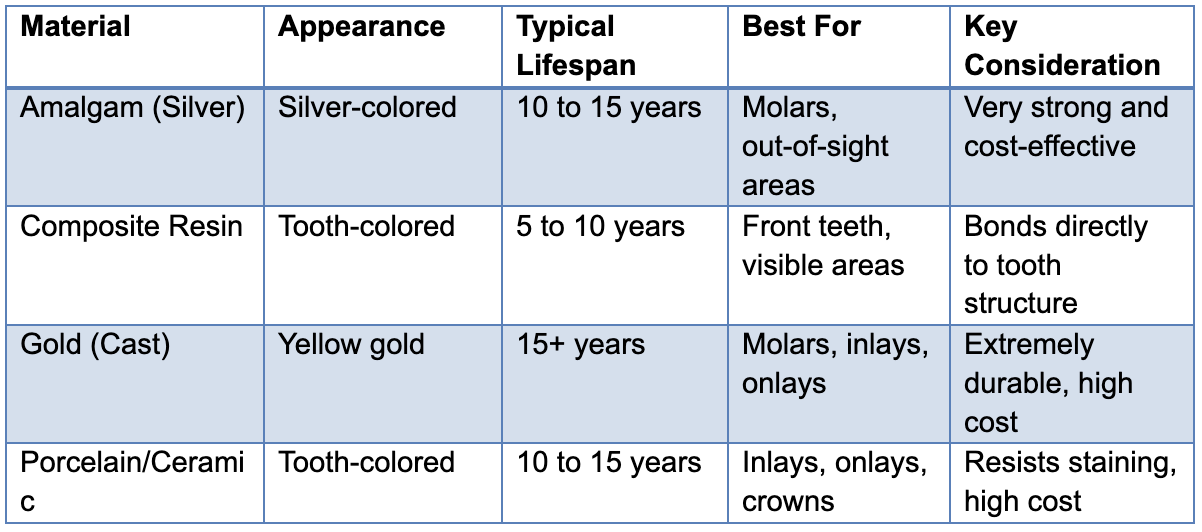
❝ Instead of focusing only on cost, ask your dentist a more strategic question: “For this specific tooth, which material will provide the best long-term seal?” A filling’s primary function is to seal out bacteria. The optimal material for that job can vary depending on the cavity’s size and the chewing pressure it must endure.
Fillings are secured in different ways. Amalgam is packed into the prepared space and held in place mechanically by the shape of the cavity. Composite resin, however, is chemically bonded to the tooth. This adhesive bond can strengthen the remaining tooth structure and often requires less drilling.
What Should I Ask About the Bonding Process?
A tooth-colored filling relies on a strong chemical bond, created through a multi-step process that establishes a microscopic seal. While metal fillings are held in place by their physical shape, a composite filling’s longevity depends entirely on this bond. A minor error in the procedure can lead to premature failure, years before it should.
The process begins after the decay is removed. First, the tooth is prepared with a mild acid gel in a step called etching. This process, analogous to sanding wood before painting, creates millions of microscopic pores on the tooth surface, which is essential for a strong lock. Next, a liquid bonding agent is applied, flowing into these tiny irregularities before being cured with a special light.
This hardened agent acts as an adhesive for the composite resin, which is then placed in thin layers. The dentist sculpts each layer to match the tooth’s anatomy and cures it with the light. This layering technique is critical because composite materials shrink slightly as they harden. Placing the material all at once would create significant shrinkage, pulling the filling away from the tooth wall and creating a gap. Layering minimizes this effect, helping to ensure a tight, solid seal.
❝ The greatest threat to a strong bond is moisture from saliva or even your breath. Ask your dentist a crucial question: “How will you keep the tooth completely dry during the procedure?” A thorough answer may mention a rubber dam, a small sheet that isolates the tooth, which indicates a meticulous approach to ensuring a durable bond.
If this process is compromised, it can lead to microleakage, a microscopic gap between the filling and the tooth. Bacteria and fluids can seep into this space, causing new decay to form underneath the filling. This hidden decay can be difficult to detect and may cause significant damage or pain. Persistent sensitivity to biting pressure or cold temperatures after a filling can be a warning sign of a compromised bond.
How Should You Care for a New Filling?
Skipping aftercare is the fourth mistake, and it is the easiest one to avoid. The first few days after a filling set the tone for how well it holds up.
Wait until the numbness wears off before you eat. While your lip, cheek, and tongue are still numb, it is easy to bite them without noticing. If you received an amalgam (silver) filling, your dentist may suggest avoiding hard chewing on that side for about a day while the material finishes setting. Composite fillings are hardened with a curing light before you leave the chair.
Some sensitivity to cold, heat, or biting pressure is normal for a few days. It should fade, not grow. Call your dentist if:
- Your bite feels high or uneven. A filling that sits even slightly too high takes extra force with every bite, which can cause soreness or crack the filling. A quick adjustment fixes it.
- Sensitivity lasts longer than a couple of weeks or gets worse. This can point to a problem with the bond or irritation of the nerve.
- You feel a sharp edge or food catches in the same spot. A rough margin traps plaque and can let new decay start at the edge of the filling.
Once the tooth feels normal, the long-term routine is simple: brush twice a day with fluoride toothpaste, clean between your teeth daily, limit sugary snacks and drinks, and keep your regular checkups so your dentist can spot wear or leakage early.
❝ If you grind or clench your teeth, mention it. A night guard protects fillings, especially composite ones, from the heavy forces that shorten their lifespan.
Frequently Asked Questions About Dental Fillings
How painful is a tooth filling? The procedure itself should not be painful, as your dentist will use a local anesthetic to completely numb the tooth and surrounding gums. You may feel some pressure or vibration from the instruments, but you should not feel any sharp pain. It is normal to experience some mild sensitivity to hot, cold, or pressure for a few days afterward, but this sensation should fade quickly.
How do I know my tooth needs a filling? Sometimes, the signs are clear, such as a sharp pain when you bite, lingering sensitivity to sweet foods, or a visible dark spot or hole. However, many cavities, especially early decay between teeth, present no initial symptoms. This is why regular dental checkups are essential. Professional exams and X-rays can detect decay in its earliest stages, allowing for treatment before it causes pain.
How long will a tooth last with a filling? While materials have typical lifespans, the longevity of your filling ultimately depends on your oral hygiene, diet, and personal habits. For a person who brushes and flosses diligently and avoids habits like chewing ice, a filling can last for decades. The same filling could fail in just a few years for someone with a high-sugar diet or a teeth-grinding habit that places excessive stress on the restoration.
Is it better to fill a tooth or remove it? It is almost always preferable to fill a tooth rather than extract it. Saving your natural tooth is crucial for maintaining the structure of your bite and preventing a cascade of other dental problems. Extracting a tooth leaves a gap that can cause adjacent teeth to shift, leading to bite and chewing difficulties. Furthermore, replacing a lost tooth with a bridge or implant is a more invasive and costly procedure than a simple filling.
Can a filling be placed on a front tooth? Yes, fillings are routinely placed on front teeth. For these highly visible areas, dentists use composite resin, a material that can be precisely matched to your natural tooth shade, making the final restoration nearly invisible. The dentist will carefully sculpt the material to restore the tooth’s original shape and appearance.
The Goal: A Filling You Can Forget
The best dental work is the kind you don’t have to think about, and achieving this outcome requires your active participation. The single greatest mistake is not related to a specific material but to waiting too long. Allowing a small cavity to grow turns a simple, inexpensive fix into a complex and costly procedure that could involve a root canal or even tooth loss. Detecting and treating decay early is the most effective strategy for preserving your natural teeth.
When treatment is necessary, focus on the quality of the seal. The primary goal is a strong, long-term seal that protects the tooth against bacteria. While aesthetics and cost are valid considerations, a filling’s ultimate success hinges on its ability to bond with the tooth and endure for years. For composite fillings, the integrity of the bond is everything. Your best tool is asking good questions. Ask how the seal will be created and protected from moisture during the procedure.
About the author This article was written by a dental industry contributor who publishes educational content on oral health topics and works with dental professionals to keep that information accurate and accessible to the public.
Read more: How to Maintain Good Oral Hygiene: Tips for a Healthy Smile
Read more: What Seniors Should Know About Dental Implants
Read more: Why Delaying Dental Treatment Can Cost You More in the Long Run