Case IH Tractors, Balers, and Harvesting Equipment: What Every Serious Farmer Needs to Know
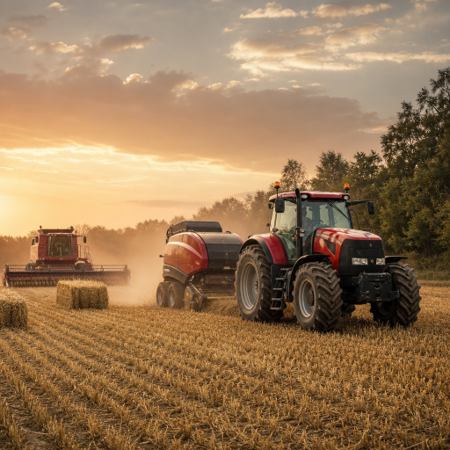
Modern agriculture demands more than hard work and good soil. It demands the right equipment — machinery that can keep pace with expanding acreage, unpredictable weather windows, and the relentless pressure to maximize yield while minimizing cost. For farmers across the Midwest and beyond, choosing the right brand and the right dealer is one of the most consequential decisions they will make. This guide explores what sets premium farm equipment apart, how agricultural technology has evolved, and why working with a trusted dealer makes all the difference when the harvest is on the line.
The Evolution of Farm Equipment and Why It Matters Today
Agriculture has undergone a dramatic transformation over the past century. What once required dozens of laborers working from sunup to sundown can now be accomplished by a single operator in an air-conditioned cab equipped with GPS guidance, precision planting controls, and real-time yield monitoring. This shift did not happen overnight. It was the result of decades of engineering innovation, field testing, and a deep understanding of what farmers actually need when conditions are difficult and time is short.
Understanding the broader arc of these changes helps put today’s equipment choices in context. A look at key agricultural advancements from the 20th century reveals how mechanization, chemical inputs, and eventually digital technology reshaped what was possible on the farm. Each era introduced tools that seemed revolutionary at the time and quickly became indispensable. Today’s precision agriculture platforms are no different — they are the standard that tomorrow’s farmers will take for granted.
Understanding the Core Equipment Categories
Tractors: The Foundation of Every Operation
The tractor remains the cornerstone of any farming operation, regardless of scale. From compact utility models suited for livestock operations and small acreage to high-horsepower row crop tractors capable of pulling wide planters across thousands of acres, the right tractor defines what a farm can accomplish in a season. Modern tractors are no longer simple mechanical workhorses. They are sophisticated platforms integrating telematics, automated steering, variable rate technology, and remote diagnostics that allow operators and dealers to monitor performance in real time.
When evaluating a tractor purchase, farmers should consider not just horsepower ratings but also hydraulic flow capacity, transmission options, cab ergonomics for long days, and the availability of compatible implements. A tractor that cannot efficiently power the equipment behind it is a liability, not an asset.
Balers: Efficiency in Every Bale
For livestock producers and hay growers, the baler is arguably the most critical piece of equipment in the lineup. Whether the operation calls for large round bales, small square bales, or large square bales for export markets, the baler must perform consistently under pressure. Downtime during a narrow hay window can mean the difference between quality feed and a field of rained-on, nutrient-depleted material that costs more to feed than it returns in animal performance.
Modern balers offer features like automatic twine and net wrap systems, bale density monitoring, and integrated moisture sensing that help operators produce consistent, marketable bales without constant manual adjustment. These features are not luxury add-ons — they are productivity tools that pay for themselves quickly in reduced labor and improved product quality.
Harvesting Equipment: Where the Season Pays Off
Combines, headers, and forage harvesters represent the culmination of an entire growing season. When the crop is ready, the equipment must perform without hesitation. A combine that struggles with tough conditions, plugs frequently, or loses grain over the back end is not just frustrating — it is directly eroding the farm’s bottom line. Today’s harvesting platforms are engineered to handle a wide range of crop conditions, from dry and brittle corn to tough, green soybeans, with minimal operator intervention and maximum throughput.
Header selection is equally important. Matching the right header to the crop and field conditions — whether that means a draper header for small grains, a corn head with aggressive stalk rolls, or a pickup header for windrow harvesting — requires both product knowledge and field experience. This is where a knowledgeable dealer becomes invaluable.
Essential Tools That Support the Big Machines
While tractors, balers, and combines capture most of the attention, a well-run farm operation depends on a broader ecosystem of implements and hand tools that support daily tasks. From soil preparation and planting to irrigation management and post-harvest field work, every piece of equipment plays a role. Farmers looking to build a comprehensive understanding of their tool requirements can benefit from reviewing essential farming tools and their uses, which provides a practical breakdown of the implements that keep operations running smoothly across every season.
H&R Agri-Power: A Dealer Built Around the Farmer
Choosing the right equipment brand is only half the equation. The dealer relationship — the parts availability, the service response time, the technical expertise available when something breaks at 10 PM during harvest — is what separates a good equipment investment from a frustrating one. H&R Agri-Power has built its reputation on exactly this kind of support, serving agricultural communities with a depth of product knowledge and a commitment to keeping farmers in the field when it matters most.
As a leading Case IH Tractors, Balers, Harvesting Dealer, H&R Agri-Power offers both new and used equipment options, giving farmers at every stage of their operation the ability to access reliable, high-performance machinery that fits their budget and their production goals. Their team understands that no two farms are alike, and they approach every customer conversation with that reality in mind.
Beyond the initial sale, H&R Agri-Power’s service infrastructure ensures that warranty work, routine maintenance, and emergency repairs are handled by technicians who know the equipment inside and out. In an industry where time is measured in bushels per hour and weather windows close without warning, that level of support is not a convenience — it is a competitive advantage.
Making the Right Equipment Decision for Your Operation
Every equipment purchase should begin with an honest assessment of the operation’s current needs and its trajectory over the next five to ten years. A farm that is expanding its acreage, diversifying into livestock, or transitioning to more intensive row crop production will have different equipment requirements than one maintaining a stable, established system. Buying for today’s needs without considering tomorrow’s growth can result in costly trade cycles and unnecessary downtime.
It is also worth evaluating the total cost of ownership rather than focusing solely on the purchase price. Fuel efficiency, parts availability, resale value, and the cost of financing all factor into the true economic impact of an equipment decision. A slightly higher upfront investment in a well-supported, high-quality machine often delivers better long-term returns than a lower-priced alternative with limited dealer support and poor parts availability.
Conclusion: Equipment That Works as Hard as You Do
Agriculture has never been a forgiving industry, and the equipment that powers it must be held to the same standard as the farmers who operate it. Whether you are in the market for a new row crop tractor, a high-capacity round baler, or a combine ready to tackle your most challenging harvest conditions, the combination of proven equipment and a knowledgeable, responsive dealer is what makes the difference between a season that meets expectations and one that exceeds them. Take the time to evaluate your options carefully, ask the hard questions, and partner with a dealer who will be there long after the sale is complete.