Beyond the Pump: What’s Changing in Industrial Vacuum Services
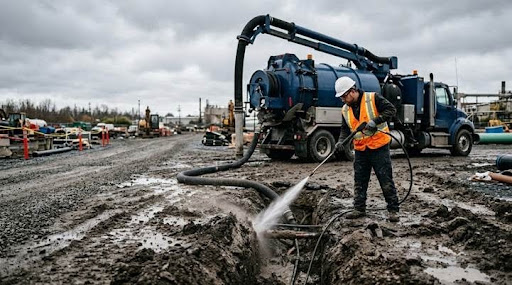
Modern hydro-excavation services use pressurized water for safe, precise digging.
By an industrial services industry contributor.
A clogged drain or an overflowing pond isn’t just a mess. It’s a risk that could shut down your business, lead to fines, or harm the environment. In the past, the fix seemed easy: call a truck to pump it out. But today, that simple approach is dangerously out of date. The job has changed from just removing waste to handling it in a careful, rule-following way.
The skills and tools needed for these jobs now cover a wide range. Modern vacuum truck services often include using high-pressure water to dig safely (hydro-excavation), figuring out exactly what’s in the waste before it’s moved, and creating paperwork that proves you followed the rules. Understanding this change is key to protecting your site and your budget. There’s a big difference between a basic pumping job and a service that follows all the environmental rules, and choosing the wrong one can be a costly mistake.
Quick answer: The biggest change in industrial vacuuming is the move from simple “suck and haul” jobs to specialized environmental services. Stricter disposal laws, better equipment, and a strong focus on safety and paperwork now define a professional company. You should expect project costs to be based on the crew’s skill and their ability to follow the rules, not just the truck’s hourly rate.
What’s inside
- How do new regulations affect project costs and timelines?
- What Separates a Professional Crew from a Basic Pumping Service?
- What’s the Difference Between a Standard Vac Truck and a Hydrovac?
- Frequently Asked Questions
- Beyond the Hourly Rate: Your Real Bottom Line
How do new regulations affect project costs and timelines?
New rules mean the cost of a job now depends more on the crew’s skill and paperwork than just the truck’s hourly price. The price you pay now includes the cost of following the rules and avoiding risks. A job that seems simple, like cleaning a storm drain, now has complex rules for handling and getting rid of the material. This change means projects can take longer to get all the paperwork done, like identifying the waste and tracking it, before a truck even leaves your site.
Labor is a big part of the cost, and it tells you a lot about the quality of the service. According to the U.S. Bureau of Labor Statistics, the average yearly pay for operators in this field was $49,590 in 2023. But the top 10 percent of these workers earned over $68,700 a year, based on the same U.S. Bureau of Labor Statistics data. This pay gap often shows who has special training for handling hazardous materials, running complex machines like hydro-excavators, and knowing detailed disposal laws. Paying for a skilled operator is an investment in avoiding expensive fines.
❝ A low hourly rate can be a major red flag. The true cost of a project includes the time to work safely, the correct waste paperwork, and the final disposal fees. A skilled crew might have a higher hourly rate but can often finish the work faster and, more importantly, protect you from future legal trouble.
This focus on following the rules shows up on the job. A professional crew will make sure to create a complete “chain-of-custody” document for any waste taken from your property. This paper trail tracks the material from your site to the approved disposal location. Without it, you could be blamed for illegal dumping, even if you didn’t know what the company did. This careful paperwork is now a required part of any real industrial vacuum project.
What Separates a Professional Crew from a Basic Pumping Service?
You can spot a professional service by their detailed safety plan, clear disposal process, and complete paperwork. These are far more important than the size of their truck. A cheap company might fix the immediate problem, but a true partner protects you from future legal problems. When you choose a company, you should check how carefully they work and if they follow the rules.
A key sign of a good company is the crew’s training and experience. While the median hourly wage for operators was $22.56 in May 2023, according to the U.S. Bureau of Labor Statistics, very skilled operators with special certifications often earn much more. This investment in skilled workers leads to better safety and efficiency on site. A well-paid, experienced operator is less likely to make a costly mistake, like labeling waste incorrectly or causing an accident. Following strict safety rules, like those from the Occupational Safety and Health Administration (OSHA) for digging, is not optional. Ask companies about their training programs and safety records.
❝ Ask a potential company for a sample of a completed waste manifest, with private client information blacked out. If they can’t or won’t provide one, consider it a serious red flag. This document is your proof of proper disposal.
The most important questions are about what happens after the material leaves your property. A professional firm will give you clear, upfront answers about their disposal methods and locations. Vague answers are not acceptable. You have the right to know exactly where your waste is going and to check that the location is a licensed, permitted facility.
Use this checklist to compare potential providers:
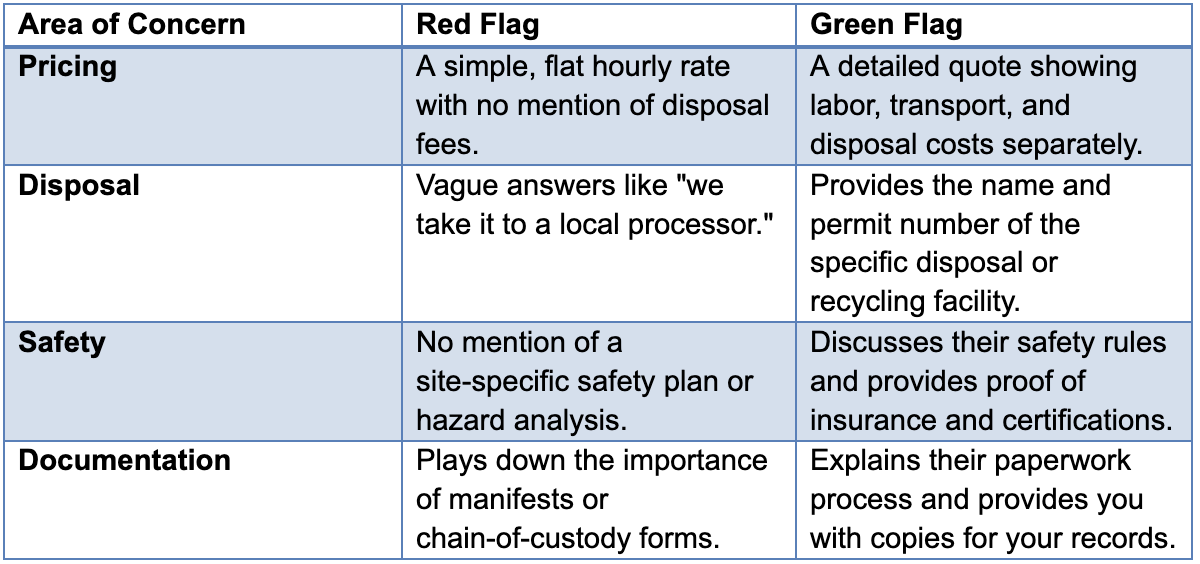
In the end, checking out a service provider is about managing risk. Choosing a company based on their ability to show and prove they follow the rules is the best way to protect your organization.
What’s the Difference Between a Standard Vac Truck and a Hydrovac?
A standard vacuum truck is made to remove liquids, sludge, or dry materials that are already loose. A hydro-excavator, or hydrovac, is a precision digging tool. It uses high-pressure water to break up soil, then vacuums up the muddy mixture. The choice between them depends on if you are moving existing material or digging up new ground. Think of it as the difference between a powerful shop vacuum and a high-tech pressure washer combined with that same vacuum.
Standard vacuum trucks are the workhorses for industrial cleaning. Their main job is suction. They are used to clean out storm drains, empty ponds, remove sludge from tanks, or clean up spills. The material is already loose, and the truck’s job is to collect and move it. These trucks can handle many materials, from water and oils to thick sludge and fine powders.
A hydrovac adds a key part: a high-pressure water jet. The operator uses a wand to carefully cut through soil, clay, or gravel, turning it into a liquid mix. The powerful vacuum then immediately removes this slurry from the hole. This process is often called “daylighting” when used to safely uncover buried utility lines without damaging them. It is a form of non-destructive digging.
❝ The most expensive mistake on a construction site is often hitting a utility line. A backhoe can cut a fiber optic cable or break a gas line in a second. The decision to use a hydrovac is rarely about the cost per hour; it’s about avoiding the huge cost of a single, preventable accident.
This technology is especially useful in crowded areas or when working near important pipes and cables. A hydrovac can dig precisely around buried utilities and foundations where a backhoe would be too risky. It is also great for digging in frozen ground, as the heated water can easily cut through frost. The choice is not about which truck is better, but which tool is right for the job and its risks.
Frequently Asked Questions
How is the total cost of a vacuum truck job calculated? Your final bill is usually made up of several parts, not just one hourly rate. Expect a fee to cover travel to your site (mobilization), an hourly rate for the crew and truck, and separate disposal fees. Many companies also have a minimum charge, often for two to four hours, to make the trip worthwhile.
Why do disposal fees vary so much between projects? Disposal costs depend on the type and amount of material. A load of clean storm water is cheap to process. But sludge with oils, chemicals, or heavy metals must go to special treatment plants and involves a lot of official paperwork. The company must “profile” the waste to find out what’s in it, and that profile sets the per-gallon or per-ton disposal price.
Are hydro-excavation services more expensive than standard vacuuming? Yes, the hourly rate for a hydrovac is usually higher than for a standard vacuum truck. This is because the machine is more complex, it uses clean water for jetting, and the operator needs advanced training. You are paying more for a precise, safe digging method that lowers the much bigger financial risk of hitting a buried utility line.
What should I expect for emergency or after-hours service costs? Emergency calls almost always cost more, often 1.5 to 2 times the standard hourly rate. It is also common for companies to have a minimum billable time, like four hours, no matter how long the job takes. This covers the high cost of getting a skilled crew on the road outside of normal business hours.
Does the service include cleaning the tank or pit after it’s emptied? Not always. A basic pumping service only removes the liquid or sludge. If you need the tank, drain, or pit cleaned well, you must ask for that when you book the job. This often requires extra services like pressure washing to remove leftover material, which would be listed as a separate cost on your quote.
Beyond the Hourly Rate: Your Real Bottom Line
Choosing a company for industrial vacuum services is really about managing risk, not just hiring help. The first hourly rate you see is often a poor sign of the project’s true cost. The real value is in how carefully a company works and their understanding that the job isn’t done until the waste is properly tracked and legally thrown away. A cheap service that creates future environmental legal trouble is the most expensive choice you can make.
The most important questions you can ask should be about their process and paperwork, not the size of their truck. A professional partner will be happy to show you their safety plans, waste-testing methods, and tracking documents. They will be able to name the specific, permitted places where your waste will be taken. This openness is not an extra bonus; it is the most important part of the service and your best protection from future trouble with regulators.
When you look at different companies, shift your focus from the price per hour to how well they follow the rules. The right partner doesn’t just solve your immediate problem. They give you peace of mind that the job was done correctly, safely, and in a way that protects your organization long after the work is complete.
About the author
Biolein is a Denver-based company specializing in environmental and industrial services. With over a decade of experience, the team provides hydro-excavation, vacuum truck services, waste management, and emergency response across Colorado and nationwide. They work with cities, construction managers, and commercial clients to manage complex projects involving waste transport, drainage solutions, and environmental compliance. The firm focuses on delivering safe and documented solutions for industrial cleaning and non-destructive digging, making sure rules are followed from collection through final disposal.
Read more: How to Select a Hydraulic Pump For Your Business (and How to Maintain It)